Welcome

"So come lose your life for a carpenter's son
For a madman who died for a dream
And you'll have the faith His first followers had
And you'll feel the weight of the beam"--Michael Card

Wednesday, September 19, 2018

Mark 15:33-39 - The Son of God

What made Jesus’s crucifixion special? That’s a question I tackle in the introduction to this sermon, the third sermon covering Mark’s account of the crucifixion story. Here’s that introduction:

“Historical estimates of the number of people, both men and women, crucified by the Romans ranges from the tens of thousands to the hundreds of thousands. In 71 BC, for example, some 6000 slaves were crucified on the same day along the Appian way outside Rome. In the province of Judea alone, during the first century, thousands of Jews were crucified—many of them during the siege of Jerusalem that Jesus warned his disciples about back in chapter 13. So the mere fact of being crucified, or even of a Jew being crucified by Romans, was not unique.

While much is made in modern times about the pain and physical agony endured by Jesus at his crucifixion, the truth is that millions have suffered similarly. The Romans were not the only ancient people to crucify. Crucifixion has also been practiced by Babylonians, Egyptians, Assyrians, Persians, Scythians, Greeks, Carthaginians, and Seleucids. There were also the Indians, Britons, Taurians, Thracians, Celts, Germans, Japanese, Wallachians, Ottoman Turks, Spaniards, Poles, Lithuanians, Swedes, Soviets, Tibetans, Chinese, North Koreans, and very recently, Islamic jihadists.

So what makes Jesus’s crucifixion special? What makes it different? Why is his remembered while so many others are forgotten? Part of the answer to that will come at the beginning of the next chapter. But much of it is answered by Mark right here in the verses laid before us this morning. This was not just any death. This was not just any crucifixion. And this was no ordinary man hanging on that Roman cross.


We pick up where we left off last week, in the middle of Mark’s crucifixion narrative. Up until now Jesus has been the passive recipient of mistreatment at the hands of many different actors. Now the narrative focuses in on Jesus. Verses 29-32 recorded the mockery of the scribes as Jesus hung on the cross. But in verse 33 there is the first of several things Mark records which makes the crucifixion unique.”

To listen to the sermon just click the link below. God bless.


Click here: Mark 15:33-39 - The Son of God


^^^^^^^^^^^^^^^^^^^^^^^^^^^^^^^^^^^^^^^^^

Tuesday, September 18, 2018

Mark 15:22-32 - He Saved Others

This is part 2 of the crucifixion narrative. Here’s how I introduced this sermon:

“If we were to approach the gospel of Mark as a skeptic, we might smirk at how hard Mark tries to paint his crucifixion story in a way as to make us believe that Jesus is the fulfillment of what was written in the Psalms and Isaiah and Zechariah. We might say that he isn’t giving a true account, he is purposefully molding the details to be in conformity with what was written in those places in order to spin this tragic misstep of Jesus (getting himself crucified) into something that was planned all along. 

And in this age of spin, where news is opinion, and where information is so hidden within the mounds and mounds of misinformation that it becomes hard to separate truth from propaganda, we might be tempted to dismiss what Mark writes on this basis. After all, it does look as if Mark is on purpose telling his story in such a way as to lead us to conclude that Jesus is the Messiah, the Son of God, and that he is the fulfillment of all that the prophets had spoken. Is Mark just spinning? Or is he accurately reporting? And the answer is ‘both.’ Mark obviously has an agenda. He announced it in the very first line of his gospel. But what if his agenda is true? What if what he is telling is both true to the historical accounts and at the same time the fulfillment of what was written in the prophets?

Something that lends credibility to Mark is the fact that the idea of a suffering Messiah was so foreign to the Jewish conception of the time. It was nowhere to be found, either in the popular thinking of the day or in the rabbinical tradition. So this twist, then, this idea of a suffering Messiah is something that blindsides them. It comes out of nowhere.

But not exactly nowhere, because it is to be found in the Psalms and Isaiah and Zechariah. It was there all along, it was just ignored or missed by the students of those Scriptures in that day. But Mark feels justified to point it out, and if it were there all along, as it was, and if it were being ignored, as it so clearly was, then who can blame Mark for recording those events of the crucifixion in such a way as to highlight their correlation with what had been written in the prophets? Wouldn’t you and I have done the same? While bias is always grounds for suspicion, bias by itself is never sufficient grounds for the rejection of a truth claim.

And here is the Christian truth claim. Here is the gospel as defined by Paul some ten to fifteen years before Mark wrote. 
For I delivered to you as of first importance what I also received: that Christ died for our sins in accordance with the Scriptures, that he was buried, that he was raised on the third day in accordance with the Scriptures,—1 Corinthians 15:3-4 (emphasis mine)
This is the Christian gospel—that the death of Christ was the plan all along and that it happened exactly according to the eternal decree of God as revealed by the prophets. Jesus was not the victim of circumstances beyond his control. Jesus is the lamb slain from before the foundation of the world.”


To listen to this sermon just click the link below. It will take you to the page on SoundCloud where the audio recording is located. You can stream it there or download it for later. God bless.


Click here: Mark 15:22-32 - He Saved Others


^^^^^^^^^^^^^^^^^^^^^^^^^^^^^^^^^^^^^^^^^

Mark 15:15-21 - “King of the Jews”

We come now to the first of three sermons from Mark’s crucifixion account. Here’s my introduction to it:

[“Death by crucifixion was one of the cruelest and most degrading forms of execution ever devised by human perversity, even in the eyes of the pagan world.” Thus wrote William Lane, professor of New Testament at Gordon-Conwell Theological Seminary in his commentary on the gospel of Mark. And because I couldn’t figure out how to say it better, or even as well, in my own words, I decided just to quote him. 


A personage no less notable than the Roman poet and politician Cicero wrote this about crucifixion: “Even the mere word, cross, must remain far, not only from the lips of the citizens of Rome, but also from their thoughts, their eyes, their ears.”

Crucifixion was not a polite subject, nor was it brought up in polite conversation. It was unequaled in both suffering and shame. In the Roman world crucifixion was an unspoken vulgarity reserved for the provinces, for slaves, and for the worst forms of criminals. And if it were this way among the Romans, one can only imagine the attitude toward it, or rather against it, among the Jewish population.

The people of Israel had never executed in this manner. Their method, prescribed in the law of Moses, was stoning. In some cases, after a criminal had been executed by stoning, the body would be lifted up and hung on a gibbet as a public display. The message was this—this is what happens to those who commit heinous offenses. Add to that the words of Deuteronomy 21:

“And if a man has committed a crime punishable by death and he is put to death, and you hang him on a tree, his body shall not remain all night on the tree, but you shall bury him the same day, for a hanged man is cursed by God. You shall not defile your land that the Lord your God is giving you for an inheritance.—Deuteronomy 21:22-23

Understand that not everyone stoned was then taken and hung on a gibbet, but some were. And the people understood the implications of that. This person has violated the law of God and for that he is cursed of God. It was an inviolable truth of Jewish thinking that anyone hung on a cross was cursed of God. And now Jesus is about to go to one of those crosses to be cursed of God.]


You will find the audio for the sermon in its entirety in the link below. Just click and listen. God bless you.


Click here: Mark 15:15-21 - “King of the Jews”


^^^^^^^^^^^^^^^^^^^^^^^^^^^^^^^^^^^^^^^^^^
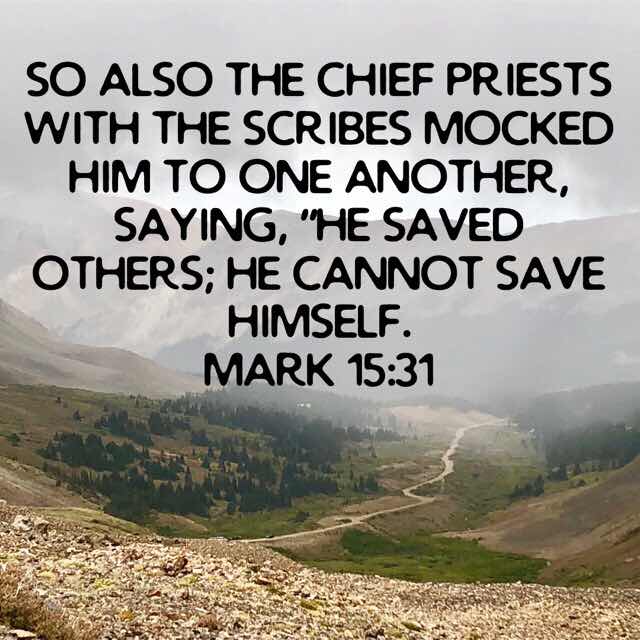
Mark 15:1-15 - Jesus Before Pilate

With the turning of the page to Mark chapter 15 we start into this, the 65th sermon I preached from the Gospel of Mark. Here’s a quotation from early in the sermon.

The Roman workday began at daybreak. It lasted until noon. Romans of the upper class spent their afternoons in leisurely pursuits. So it is vital, if they want to get this done, that they have Jesus before Pilate first thing in the morning. After having worked all night, the Sanhedrin meets one final time to make sure their ducks are in a row before they send him over to Pilate to be condemned.


Pilate served as the governor of Judea for about ten years, between 27 and 36 AD. His official title was “Prefect” and he was of a class of Romans just below senator. His job was to maintain peace and order in this province. Pilate did not live in Jerusalem, nor did any other Roman prefect who governed Judea in the first century. Pilate’s house was in Caesaria Maritima on the Mediterranean coast. But during the feasts, when so many pilgrims were crowding into the city, the governor would come stay in Jerusalem to help ensure order was maintained. The usual place of his temporary abode would have been Herod’s palace. 

So Jesus is bound and marched under guard through the streets to Herod’s palace where he arrives just in time for the beginning of Pilate’s day. Mark gets straight to the point and begins immediately describing Jesus’s trial before Pilate.”


And so the sermon covers the first fifteen verses of this chapter and takes us all the way to the flogging of Jesus. I hope you will take the time to listen to it. The sermon contains both information that you’ve probably never heard and application and meaning which you may have never thought of. So I hope you’ll listen. Just click the link below. God bless.


Click here: Mark 15:1-15 - Jesus Before Pilate


^^^^^^^^^^^^^^^^^^^^^^^^^^^^^^^^^^^^^^^^^^^

Sunday, August 26, 2018

Mark 14:54,66-72 - Peter Denies Jesus

From the introduction to this sermon:

Peter, to me, is the most interesting of the twelve apostles, perhaps because we are given more insight into his character than we are of any of the others. Peter is among the first called in every gospel. He is often the mouthpiece for the rest. He is the first to speak up, the first to take action, the boldest, the sincerest, the most passionate. And when he falls he falls the hardest. And that’s what we are looking at here in this last pericope of Mark 14–the fall (though temporary) of Peter.

Mark has tied this story together with that of Jesus’s trial because they both happen at the same time and in relatively the same location. While Jesus is in an upper room facing his accusers, Peter is down in the courtyard warming his hands by the fire with Jesus’s enemies. The contrast could not be more clear, and no doubt Mark intended for us to see it. And not just us, but primarily his immediate audience of persecuted followers of the Way in Rome.

For good reason this has been called the trial of Peter. The parallels to what is going on upstairs is obvious. While Jesus is being interrogated, Peter faces interrogation. Both lives are in danger. Answering truthfully comes at a price. Jesus answers truthfully and boldly and accepts that price willingly. Peter lies, and denies, and tries his best to avoid the shame and the cost of knowing Jesus. While both are on “trial” in the sense of facing tough questions from antagonistic accusers, both are also facing this trial because of the loving providence of God. 

Jesus was sent to earth for this by the love of the Father. It is his own love which compels him forward. And it is the Spirit of love within him which strengthens him for what is ahead. And Jesus, though condemned by the Sanhedrin, will ultimately be vindicated by the Father. Meanwhile, Peter will avoid being found guilty in the courtyard, only to be overwhelmed by his guilt before God. It is only a word in the resurrection scene of chapter 16 which will give us hope of his restoration. 


So in this trial, Jesus anchors his trust upon the will of the Father and passes the test. Meanwhile Peter trusts to conniving and manipulation—to self—and fails.”

To listen to the audio recording of this sermon just click the link below. A new window will open in your browser and you will have the opportunity to with stream the audio right away or download it for later listening. God bless.


Click here: Mark 14:54,66-72 - Peter Denies Jesus


^^^^^^^^^^^^^^^^^^^^^^^^^^^^^^^^^^^^^^^^^^^^

Tuesday, August 21, 2018

Mark 14:53-65 - Jesus Before the Sanhedrin

We are reaching the climax of the gospel of Mark and every pericope seems to grow in intensity and drama compared to the last. In the sermon prior to this one Jesus was betrayed and arrested. In this sermon he appears before the Sanhedrin. In the next he is denied by Peter. That will close chapter fourteen but the narrative still proceeds rapidly. In chapter fifteen we will witness Jesus as he witnesses a good profession before Pontus Pilate. That will be followed by three sermons covering Mark’s telling of the crucifixion story. Only four sermons will remain after that to finish this gospel up.


But right now the circumstances seem to be spiraling rapidly out of control for Jesus—at least we would think so if it weren’t for Mark who, time after time goes out of his way to make it clear that Jesus remains in complete control of these events which are leading to his death. Remember, this is the purpose for which he has come and we know this because he has told us over and over again. So in this sermon I describe the trial scene as Jesus goes before the Sanhedrin and show the irony of an innocent Messiah declared guilty for making false claims of being Messiah, claims which would have been true had he made them, but he didn’t, at least not publicly. In this sermon I show you the audacity of a man in chains claiming to be the king of the people who’ve chained him, a man dying at the hand s of a people he came to save, and doing so on purpose. And I explain what it all means. I hope you’ll listen.

Just click the link below. God bless.


Click here: Mark 14:53-65 - Jesus Before the Sanhedrin


^^^^^^^^^^^^^^^^^^^^^^^^^^^^^^^^^^^^^^^^^^^^^^^
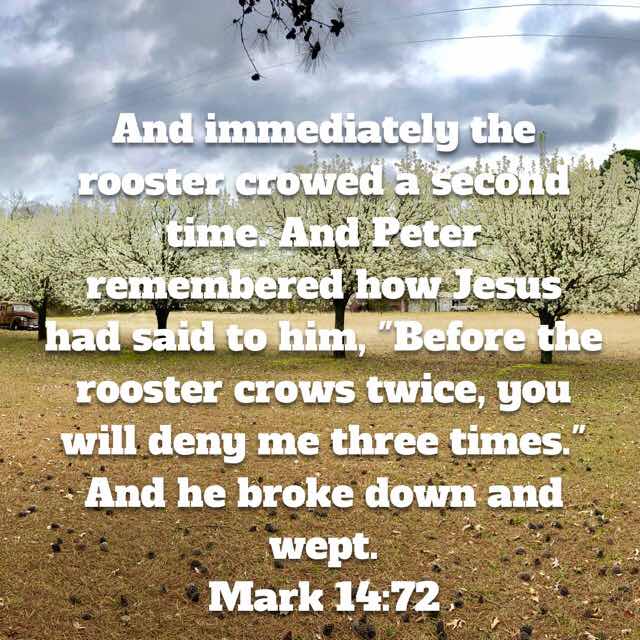
Tuesday, August 14, 2018

Mark 14:43-52 - Jesus Betrayed and Arrested

This is how I began this sermon on Jesus’s betrayal and arrest from Mark 14. From the introduction:

“We have been with Jesus and the disciples now for nearly fourteen chapters. They have been his constant companions since he called the first of them back in chapter one. Every story we’ve looked at has involved them. They understand. They don’t understand. They confess. They believe. They forget to bring bread. They fail to act in faith. They marvel. They are afraid. They rebuke Jesus. They ask him questions. They forsake all to follow him. 

They are there, on the inside with Jesus, every step of the way. The crowd gets a parable. The disciples get an explanation of the parable. The crowd gets fed. The disciples get a lesson and a challenge. Many of the miracles Jesus does he does for their sakes alone. He is teaching them, preparing them, strengthening them, being patient with them, promising them, warning them. For them he calms the storm. For them he walks on water. For them he takes a child into his arms and says, “Whoever receives one such child in my name receives me.” “The first shall be last, the last shall be first,” all of this has been for the disciples. They have been with him in every story, every step of the way, from the Sea of Galilee where he found them in chapter one, to right here in an olive grove just outside the city gates of Jerusalem. Jesus and the disciples. Jesus and the disciples.

And now all of that is about to change.


Now the disciples will fade into the background. Now Jesus will face the end alone. But he has prepared them for this, or tried to. He’s been telling them since chapter eight what is going to happen to him. And now the time has come. Jesus has resigned himself to the will of the Father completely. The chessboard has been set, the pieces are all in place. The Son of Man goes as it is written of him.”

To listen to the audio recording of this sermon just click the link below. A new page will open up in your browser and you can follow the instructions to either stream it on your device or download it for later. I hope you’ll take the time to listen. God bless you.


Click here: Mark 14:43-52 - Jesus Betrayed and Arrested


^^^^^^^^^^^^^^^^^^^^^^^^^^^^^^^^^^^^^^^^^^^^